The Meaning Behind Denim Tears Canada’s Iconic Cotton Wreath Design
Denim Tears has become one of the most powerful and thought-provoking brands in contemporary fashion, seamlessly merging art, activism, and apparel. Founded by Tremaine Emory, the brand has built its identity around telling the story of the African diaspora and confronting the denim tear complex history of Black existence through clothing. One of the most striking and recognizable elements of Denim Tears’ design language is the cotton wreath motif. This symbol, printed prominently on denim jeans, jackets, and other pieces, has transcended mere aesthetics—it has become a statement of history, pain, resilience, and cultural pride.
In recent years, Denim Tears Canada has embraced this emblem even more strongly, using it not just as a logo, but as a visual narrative that challenges the fashion industry to acknowledge its deep connections to colonialism, slavery, and Black creativity. Understanding the meaning behind the cotton wreath design is to understand the soul of Denim Tears itself—a brand that turns fabric into testimony.
A Symbol Rooted in History
To truly grasp the depth of the cotton wreath design, one must look back to the painful yet significant history of cotton in relation to the African diaspora. Cotton was one of the central crops of the transatlantic slave trade and the backbone of the colonial economy. Millions of enslaved Africans were forced to cultivate and pick cotton under brutal conditions, generating immense wealth for plantation owners and European industrial powers while enduring unimaginable suffering.
In this context, cotton is far more than just a natural fiber—it represents both exploitation and endurance. By placing cotton at the center of Denim Tears’ aesthetic, Tremaine Emory reframes it as a symbol of remembrance and resistance. The cotton wreath becomes a living memorial for those who suffered and a declaration that their labor, pain, and humanity will not be forgotten or erased.
The Cotton Wreath as a Counter-Narrative
Fashion has long been used to express power and identity, but it has also played a role in silencing or sanitizing uncomfortable truths. The global denim industry, for instance, is built on materials and labor practices that trace back to colonial exploitation. Emory uses the Denim Tears cotton wreath as a counter-narrative to that tradition.
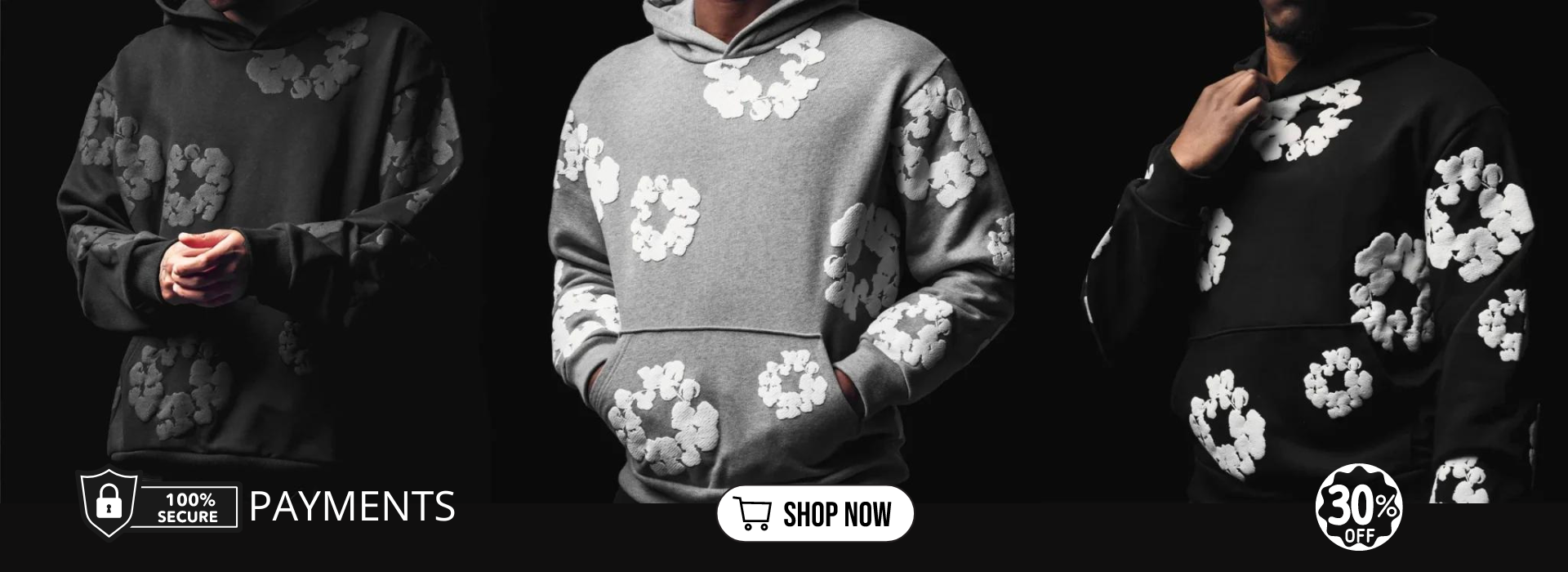
When Denim Tears jeans are adorned with embroidered or printed cotton wreaths, they serve as wearable art—each garment a small act of rebellion. The wreath transforms a common fashion staple into a conversation piece that confronts the wearer and the observer with questions about where fashion comes from and who paid the price for it.
In Canada, this symbolism takes on additional dimensions. The country’s history of colonization, Indigenous displacement, and participation in transatlantic trade networks makes the Denim Tears message particularly resonant. The wreath, worn by Canadians from diverse backgrounds, becomes a bridge between histories—a reminder of the interconnected legacies of oppression and resilience across the Americas.
Tremaine Emory’s Vision: From Pain to Empowerment
Tremaine Emory, often referred to as “the cultural connoisseur,” founded Denim Tears not simply as a fashion label, but as a storytelling platform. His work is steeped in history and emotion, drawing from the Black experience in both America and the wider world. Emory once explained that he wanted to make clothes that “speak to the Black experience honestly.” That honesty means confronting uncomfortable truths while also celebrating beauty and strength.
The cotton wreath exemplifies this duality. A wreath traditionally symbolizes honor and remembrance—it is used to pay tribute to the dead or commemorate sacrifice. By pairing this imagery with cotton, Emory pays tribute to the countless unnamed Africans whose forced labor built empires. Yet, the design also reclaims cotton as a symbol of Black creativity and endurance. What was once a sign of oppression becomes a mark of pride.
This transformative act is central to Denim Tears’ ethos. The brand asks: What happens when we take the tools of our oppression and make them our own? The answer lies in the power of reclamation—turning pain into art, loss into legacy, and material into message.
Denim Tears Canada: Expanding the Conversation
In the Canadian context, Denim Tears has found an audience eager to engage with its layered message. Canada, often viewed through the lens of multicultural harmony, has its own complicated history of race, class, and colonialism. The Denim Tears Canada chapter amplifies the cotton wreath design as a global statement—a reminder that the story of cotton, slavery, and exploitation is not confined to one nation.
Canadian artists, musicians, and activists who wear Denim Tears pieces often do so as a form of cultural expression and solidarity. The brand has become part of a larger movement in Canada toward truth-telling, historical reckoning, and acknowledgment of systemic injustices. The cotton wreath, seen on denim jackets and jeans in cities like Toronto, Montreal, and Vancouver, becomes both a fashion statement and a call to reflection.
It also connects with the experiences of other marginalized groups. The symbolism of the wreath extends beyond the Black diaspora, resonating with Indigenous communities who have also faced displacement and exploitation tied to colonial expansion. Denim Tears Canada, therefore, stands at the crossroads of multiple narratives of struggle and survival.
The Aesthetics of Memory
Beyond its political meaning, the cotton wreath design holds aesthetic power. Emory’s approach to fashion is deeply artistic, blending minimalism with emotional depth. The wreath often appears in white cotton motifs embroidered against the deep indigo of denim—a stark contrast that evokes both beauty and sorrow.
This visual tension mirrors the emotional one: beauty emerging from pain. The natural circular form of the wreath suggests continuity, eternity, and rebirth. Just as the cotton plant continues to grow from soil stained by history, the design reminds us that cultural memory, too, continues to bloom. Each piece of Denim Tears clothing becomes a vessel carrying that memory into modern life.
Cultural Impact and Legacy
Since its inception, Denim Tears has collaborated with major brands such as Levi’s and Converse, bringing the cotton wreath design to a global audience. These collaborations have introduced millions to the message behind the motif, ensuring that it remains more than a niche symbol—it becomes a shared cultural artifact.
In Canada, the legacy of Denim Tears continues to inspire a new generation of designers who see fashion as a medium for storytelling and social commentary. The cotton wreath is no longer just an emblem of Denim Tears; it has become a universal signifier of reflection, dialogue, and transformation.
By challenging the boundaries of what fashion can represent, Denim Tears invites wearers to participate in a collective act of remembrance. When someone dons a pair of jeans emblazoned https://denimtears.ca/sweatshirt/ with the cotton wreath, they are not merely making a style choice—they are engaging in a form of cultural activism.
Conclusion: A Wreath for the Future
The Denim Tears cotton wreath is one of the most profound symbols in modern fashion—a fusion of art, memory, and resistance. It transforms the ordinary into the sacred, reminding us that even the simplest garment can carry the weight of history.
Through its Canadian chapter, Denim Tears continues to spread this message across borders, reminding the world that fashion can be a tool of truth-telling and healing. The cotton wreath teaches us to honor the past while looking toward the future with pride and awareness.
In every thread and stitch, the design speaks of transformation—the transformation of suffering into strength, silence into voice, and history into hope. Denim Tears Canada’s iconic cotton wreath is not just a design. It is a story woven into fabric, a wreath laid upon history, and a promise that remembrance will always live on.