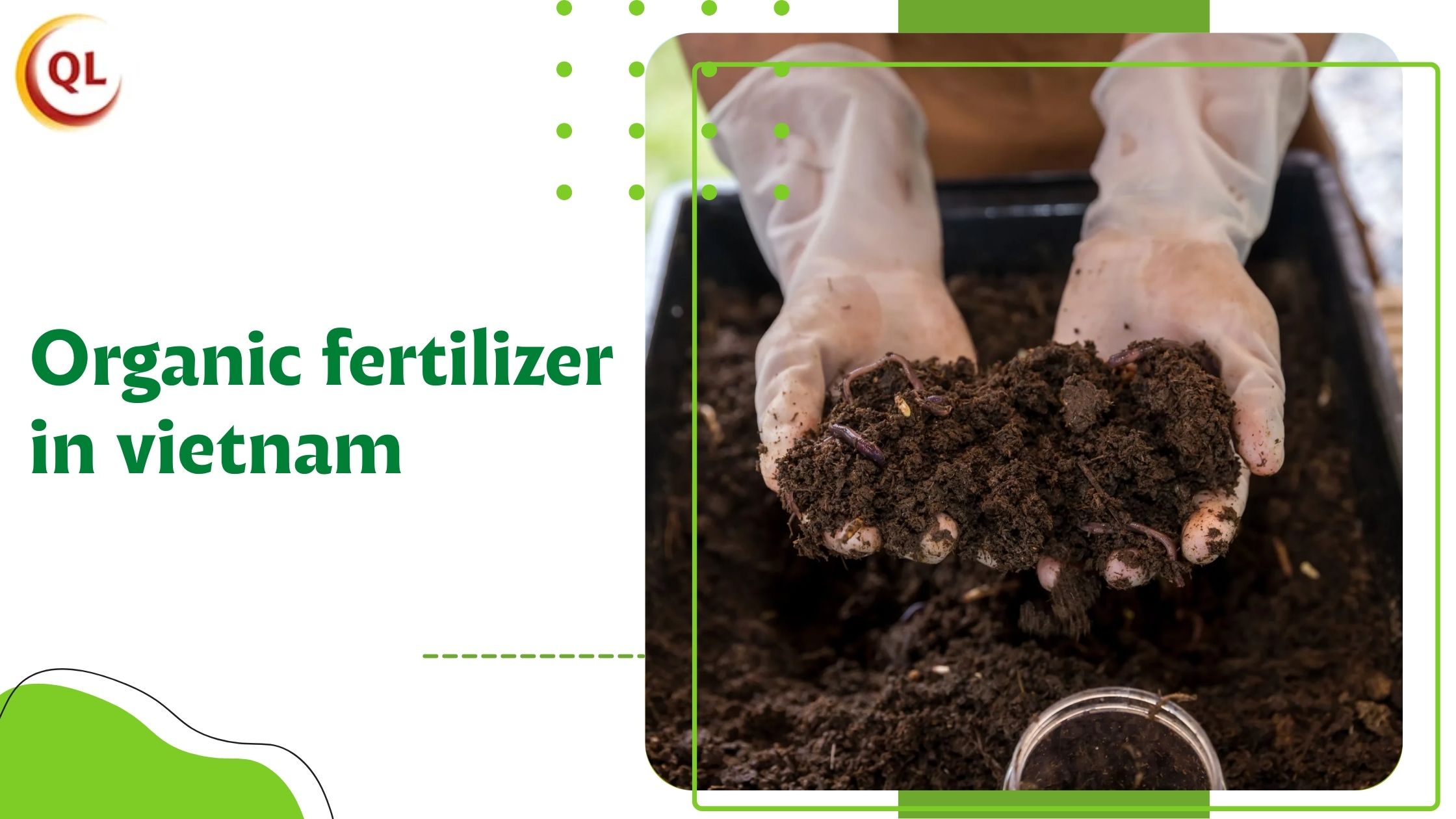
Growing Demand for Organic Fertilizer in Vietnam: Market Trends
Vietnam’s agricultural sector is shifting. Farmers, exporters and policy makers are increasingly prioritizing sustainability, soil health and food safety — and that shift is driving real demand for Organic Fertilizer in Vietnam. At Qlfarms, we see this every day: farmers who once relied heavily on synthetic inputs are now adopting organic and biological solutions to protect yields, improve soil life and meet growing buyer expectations for safer, traceable produce.
Why demand is rising now
Several factors are accelerating interest in organic fertilizers across Vietnam: rising consumer preference for safer food, stricter export and domestic food-safety standards, government programmes encouraging sustainable farming, and growing farmer awareness that healthy soil equals long-term productivity. Market studies report strong year-on-year growth for organic fertilizer markets as stakeholders respond to environmental concerns and climate risk.
IMARC Group
+1
Market size and growth — a mixed but clear picture
Different market reports offer varying estimates — but the direction is unanimous: growth. Some analysts put the Vietnam organic fertilizer market in the tens of millions of USD with high single-digit to double-digit CAGRs projected through the next decade, reflecting expanding production, new product launches and more organised distribution channels. Other forecasts show continued steady growth as large commodity markets slowly convert a share of demand to organic lines. These differences reflect reporting scope (some count only commercially produced organic fertilizers, others include on-farm composting and manure use), but they all point to rising opportunity for producers and suppliers.
IMARC Group
+1
Where the demand is coming from
Export-oriented horticulture and fruit growers — Buyers in export markets increasingly demand lower residues and organic certification for premium pricing.
Rice and vegetable producers experimenting with integrated nutrient management — Farmers face pressure to reduce input costs and improve soil resilience; organic options are being trialled for improved soil structure and moisture retention.
Processors and retailers — Supermarkets and food brands that cater to health-conscious consumers push for traceability and safer inputs, creating pull-through demand.
These market shifts are mirrored by broader fertilizer consumption patterns in Vietnam, where total fertilizer use remains large but the share of organic and locally produced bio-inputs is growing as part of diversification strategies.
agroberichtenbuitenland.nl
Organic Biofertilizer: the technical edge
Organic Biofertilizer (microbial inoculants and organic nutrient blends) complements organic NPK and composts by actively enhancing soil biology — fixing nitrogen, solubilising phosphorus and promoting root growth. Biofertilizers improve nutrient use efficiency, reducing the amount of external inputs needed over time. As biofertilizer formulations improve and become easier to apply (granules, liquids for fertigation, seed coatings), adoption among smallholders and commercial farms alike gains momentum.
IMARC Group
Supply-side trends and innovations
Domestic producers and international suppliers are responding with:
Improved processing (granulation, pelletising) for easier transport and dosing;
Blended products that combine organic NPK with beneficial microbes;
Distribution partnerships linking producers to agro-dealers and cooperatives.
Investment in R&D — including trials that demonstrate yield parity and soil health benefits — is a critical next step for scaling adoption. Several market reports note an uptick in start-ups and new product launches tailored to regional crops and climates.
Markets and Data
+1
Challenges that still need solving
Adoption isn’t automatic. Farmers often cite price sensitivity, inconsistent product quality, lack of clear application guidance, and limited access to certified organic channels as barriers. Additionally, some regions still rely heavily on low-cost inorganic fertilizers, and behaviour change takes time. Overcoming these hurdles requires education, transparent quality standards, field demonstrations, and commercially viable product pricing — areas where companies like Qlfarms can add value.
Opportunities for Qlfarms and partners
Customised blends: Tailor organic formulations to local soils and crops (rice, cashew, fruit, vegetables).
Farmer training & demo plots: Show measurable benefits — better soil structure, improved nutrient cycling and stable yields.
Partnerships with cooperatives and exporters: Build supply chains that value-certified inputs and reward sustainable practices.
Integrating biofertilizer with organic NPK: Offer combined programs that tackle both biological and nutrient needs for faster, more reliable results. Market reports flag integrated solutions as a major growth driver.
IMARC Group
+1
What this means for Vietnamese agriculture
The move toward Organic Fertilizer in Vietnam is not a short-term fad — it’s a structural transition influenced by environmental limits, market incentives and consumer preferences. For farmers, it promises more resilient soils and access to premium markets. For the industry, it opens new product categories, value-added services and export potential.
At Qlfarms, we’re preparing for that future by developing high-quality organic blends and biofertilizer solutions backed by field trials and farmer support. We believe the best path forward for Vietnamese agriculture balances productivity with soil health — and that organic fertilizers will be central to that balance.
Modern farming faces serious challenges such as soil degradation, rising input costs, climate instability, and declining crop quality. Traditional chemical fertilizers may provide fast results, but they often damage long-term soil structure and reduce beneficial soil organisms.
A professional Natural Fertilizer Supplier offers more than just products. They provide guidance, consistency, and reliable formulas that work with natural soil systems, helping farms become more productive and sustainable over time.