Enhancing Security with Document Liveness Detection and Face Match Verification
As the world moves rapidly towards digital transformation, businesses are increasingly adopting remote customer onboarding, online authentication, and digital identity verification. This shift has unlocked convenience, speed, and operational efficiency. However, it has also led to a rise in identity fraud, fake profile creation, synthetic identities, deepfake attacks, and document forgery. To create a secure and trust-based digital environment, organizations are now relying on advanced biometric verification technologies such as Document Liveness Detection and Face Match Verification. These two technologies, when combined, provide strong protection against identity manipulation and ensure that only legitimate users gain access to services.
_______________________________________
Understanding Document Liveness Detection
Document Liveness Detection is a method used to verify if the identity document being submitted—whether it's a passport, ID card, driving license, or any government-issued document—is physically real and present at the time of verification. It detects whether the document has the necessary physical security features such as:
• Holograms and reflective patterns
• Microtext and fine-line graphics
• Edge textures and embossing
• Color shifting inks
• Official seals and watermarks
More importantly, modern liveness detection systems analyze user-captured document images or video streams to identify if the document is live or counterfeit. The system checks for conditions like:
Verification Check Purpose
Surface reflections To confirm the document is not a printed copy
Motion cues Ensures the user is holding a real document
Light and shadow variations Confirms the presence of a physical object
Security element detection Recognizes official validation features
This process prevents fraudsters from using fake copies, screenshots, edited images, scanned documents, or photos displayed on digital screens. By requiring real-time motion and interaction during capture, organizations ensure that no fabricated or stolen identity document passes the verification stage.
______________________________________
What is Face Match Verification?
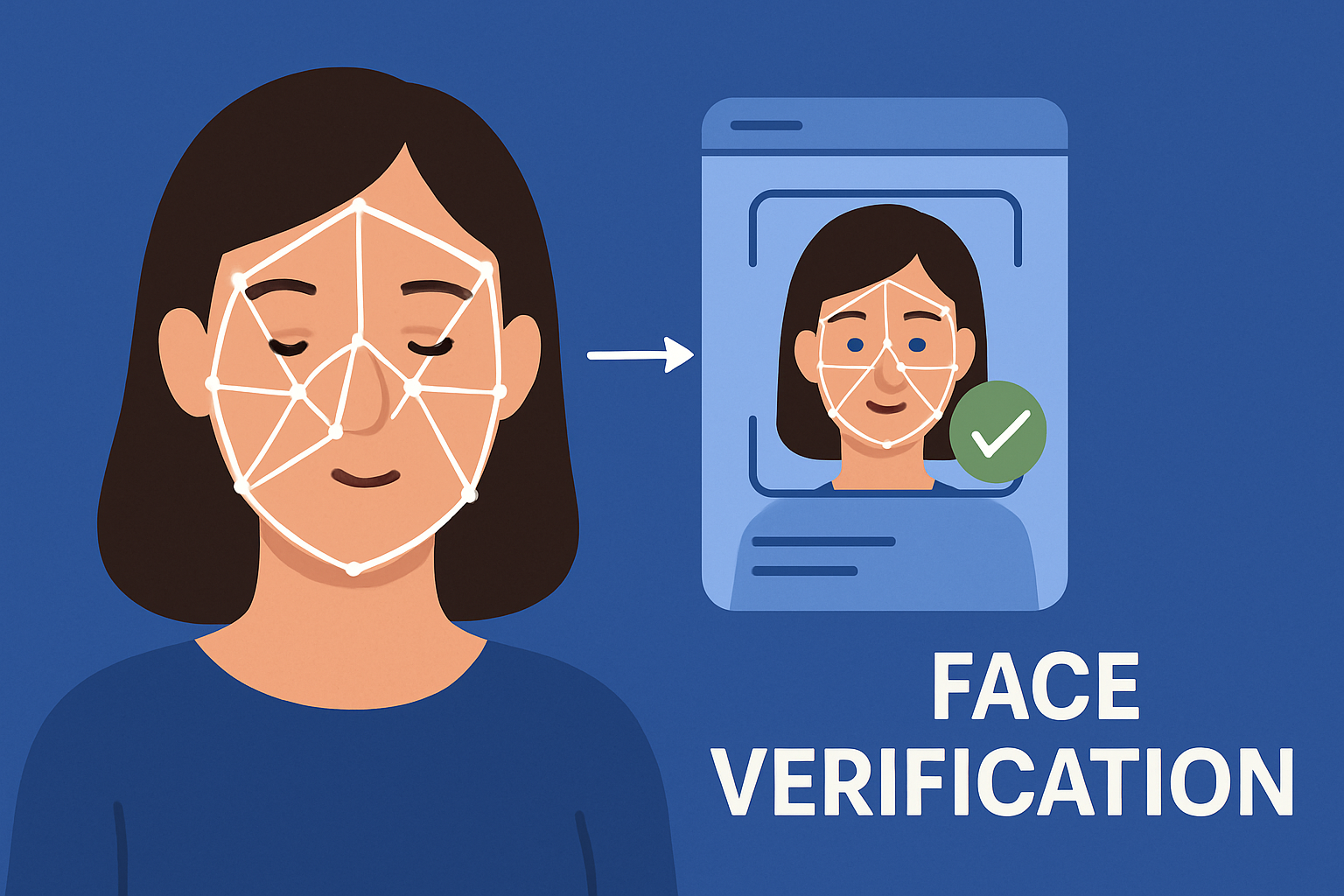
Face Match Verification, often referred to as facial biometric comparison, verifies that the face visible on the identity document belongs to the same person who is presenting it during onboarding. It uses artificial intelligence, deep neural networks, and biometric algorithms to analyze multiple facial features such as:
• Eye spacing and alignment
• Nose, chin, and jawline shape
• Skin tone and texture patterns
• Lip symmetry and contour
• Overall facial geometry
The system captures a selfie or live video of the user and compares it with the face extracted from the document. To prevent deepfakes or manipulation, advanced systems include Face Liveness Detection, which checks for real human presence by requiring natural actions such as blinking, head movement, smiling, or simple gestures.
______________________________________
Why Are These Technologies Important Today?
With fraudsters using increasingly sophisticated methods such as face morphing, mask attacks, deepfake videos, and advanced photo editing, manual verification methods are no longer sufficient. Cybercriminals can replicate identities easily using stolen IDs found on the dark web.
Document Liveness Detection and Face Match Verification help organizations:
• Eliminate Identity Spoofing: Ensures no fraudulent or fake user can enter the system.
• Reduce Manual Intervention: Automated verification speeds up user onboarding and lowers operational costs.
• Comply with KYC/AML Regulations: Supports global regulatory standards for safe customer identification.
• Improve Trust and User Safety: Customers feel confident knowing their data and identity are secure.
• Enhance Customer Experience: The process is fast, user-friendly, and requires only a smartphone.
______________________________________
Industries Benefiting from These Technologies
These verification solutions are transforming security across multiple sectors:
Industry Use Case
Banking & Fintech Digital account opening, e-KYC verification, loan processing
Telecom Providers Secure SIM or eSIM activation, customer onboarding
Healthcare Verified patient registration, telemedicine identity checks
Travel & Hospitality Hotel check-ins, boarding verification, airport security
Government & Public Services Citizen authentication for welfare schemes, passport applications, tax services
E-Commerce & Delivery Platforms Verified seller onboarding, safe courier delivery authentication
______________________________________
How the Combined Verification Workflow Operates
A typical secure onboarding process follows these steps:
1. User Uploads Document
The customer captures front and back images of their ID document using their phone camera.
2. Document Liveness Check Initiates
The system verifies authenticity using AI-based liveness analysis and security feature testing.
3. Selfie or Live Video Capture
The user captures a selfie or performs short live actions like blinking or moving their head.
4. Face Matching Begins
The system compares the document photo and live image to confirm the individual's identity.
5. Verification Result Generated
If the document is genuine and the face matches, onboarding is approved instantly.
This automated process takes just 5 to 15 seconds, making it ideal for digital platforms that prioritize both security and user convenience.
______________________________________
Benefits of Using Both Technologies Together
• Strong Anti-Fraud Shield: Reduces the risk of forged documents and impersonation attacks.
• Faster Onboarding: Eliminates lengthy manual verification steps and wait times.
• High Accuracy: Modern AI ensures precise recognition even with lighting differences or slight pose variations.
• Scalability: Works seamlessly for millions of users globally.
• Cost Efficiency: Minimizes the need for human review teams.
_______________________________________
Conclusion
In a world where digital transactions and remote services are rapidly increasing, ensuring identity authenticity is essential. Document Liveness Detection verifies whether the document being used is real and present, while Face Match Verification confirms that the user and the document holder are the same person. Together, these technologies create a secure, seamless, and trust-driven experience for both businesses and customers.
By adopting these advanced verification methods, organizations can confidently prevent fraud, protect user identity, and comply with global regulatory standards—all while offering a smooth and modern onboarding experience.